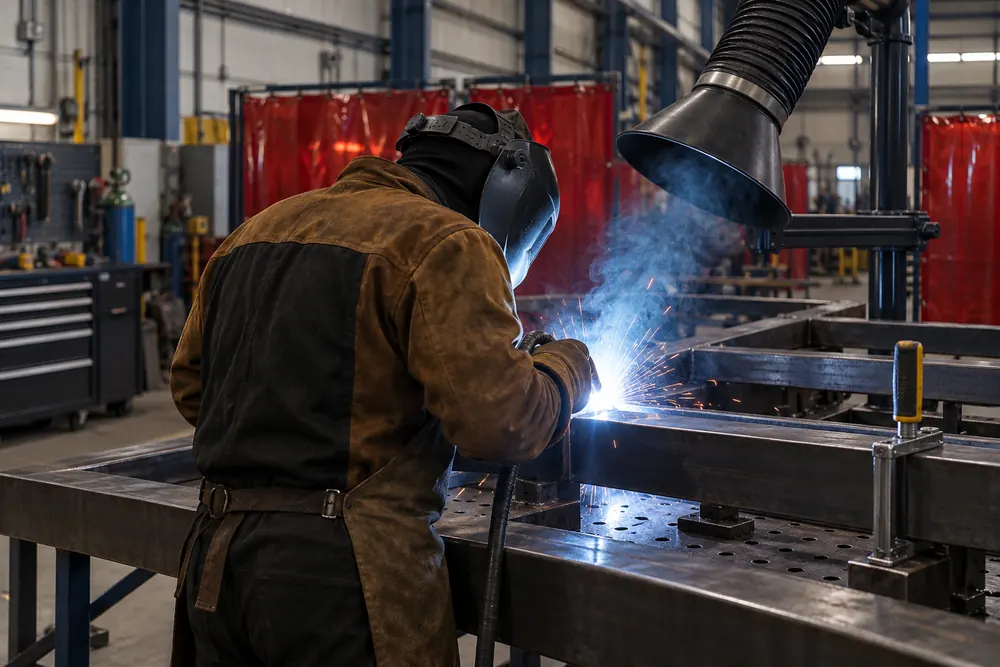
A Weld Is Part Of The Assembly
Welding joins metal through a controlled process, with joint preparation, consumables and technique chosen for the material and duty. A tidy weld on a Hull workshop assembly still needs to meet the joint’s specified strength and inspection criteria. The design and inspection requirements should match what the assembly will carry or contain.
We help scope welding enquiries for commercial fabrication, equipment frames and steel assemblies. For your Hull welding enquiry, identify any existing steelwork being altered or repaired, or confirm that the assembly is entirely new. Photographs can support an initial discussion, but final acceptance may depend on material identification, access and inspection of the actual component.
Workshop Welding And Site Conditions
Workshop welding allows the workpiece, extraction and welding position to be arranged around the joint. Larger assemblies can be built in stages, with fixtures helping maintain alignment. The process should consider distortion, access for the torch and whether the finished connection can be inspected.
Site welding introduces constraints such as nearby activity, weather, coatings, fire risk and restricted access. A permit to work or hot-work permit may be required by the premises. Agree who isolates equipment, protects adjacent areas and manages fire precautions before a site welding package is confirmed.
Repair Starts With The Cause
A cracked weld can be a symptom of fatigue, overload, poor alignment or an unsuitable original detail. Simply adding more weld may leave the underlying cause unchanged. For load-bearing or safety-critical items, obtain an engineering assessment before agreeing a repair method.
The original material may also be uncertain, especially on older equipment or previously modified steelwork. Coatings and contamination can affect preparation and exposure controls. Provide any drawings, material records and history of the fault, and explain whether the component can be removed for workshop assessment.
Welding Fume And Workplace Controls
The Control of Substances Hazardous to Health Regulations 2002 require exposure to hazardous substances to be controlled. HSE guidance identifies extraction and, where necessary, suitable respiratory protection as important welding controls. The right approach depends on the process, material, frequency and location of the work.
Outdoor work should not be assumed safe because there is natural ventilation. Controls must be assessed for the actual task and for other people who could be exposed. HSE’s welding COSHH essentials provides task guidance, while safe working arrangements must also address burns, arc exposure and fire.
Procedure, Competence And Inspection
For structural fabrication, the project specification and relevant BS EN 1090 requirements determine the welding quality controls and evidence needed. Ask which welding procedures, welder qualifications and inspection records apply to your package. A general claim about welding ability is not a substitute for the documents required by the project.
Inspection can involve visual checks and specified non-destructive testing where the design or execution requirements call for it. Agree acceptance criteria and hold points before welding begins. Testing after coating or after an assembly has been enclosed can be difficult, which makes inspection access a design consideration.
The work sequence should also account for shrinkage and distortion. Suitable preparation, fitting and controlled assembly help preserve the intended dimensions. Any repair of a rejected joint should follow an agreed method with reinspection, rather than being concealed by grinding or paint.
How To Brief A Welding Enquiry
Supply material details, thicknesses, joint drawings, quantities and the intended use of the assembly. Include photographs of existing work and identify which faces are accessible. Tell us about coatings, nearby services, operating restrictions and any documents your project requires at handover.
Cost is influenced by preparation, joint length and complexity, welding position, access, inspection and whether the work is on site or in a workshop. A short difficult repair can involve more preparation than a longer straightforward production weld. For a complete new assembly, start with metal fabrication in Hull so the whole package can be assessed.
Welding FAQs
Can A Cracked Steel Weld Be Repaired?
A cracked steel weld may be repairable after its cause, material and loading have been assessed. Welding over a crack without resolving the cause can lead to another failure. Supply photographs and the component history, then agree any engineering review, preparation, repair procedure and inspection needed before the item returns to service.
Can Welding Take Place At Our Premises?
Welding at commercial premises depends on access, fire precautions, fume controls and a suitable working area. The site may require permits, isolation and separation from other activities. Describe the location and surrounding materials in your enquiry so the feasibility of site work can be assessed before any attendance is arranged.