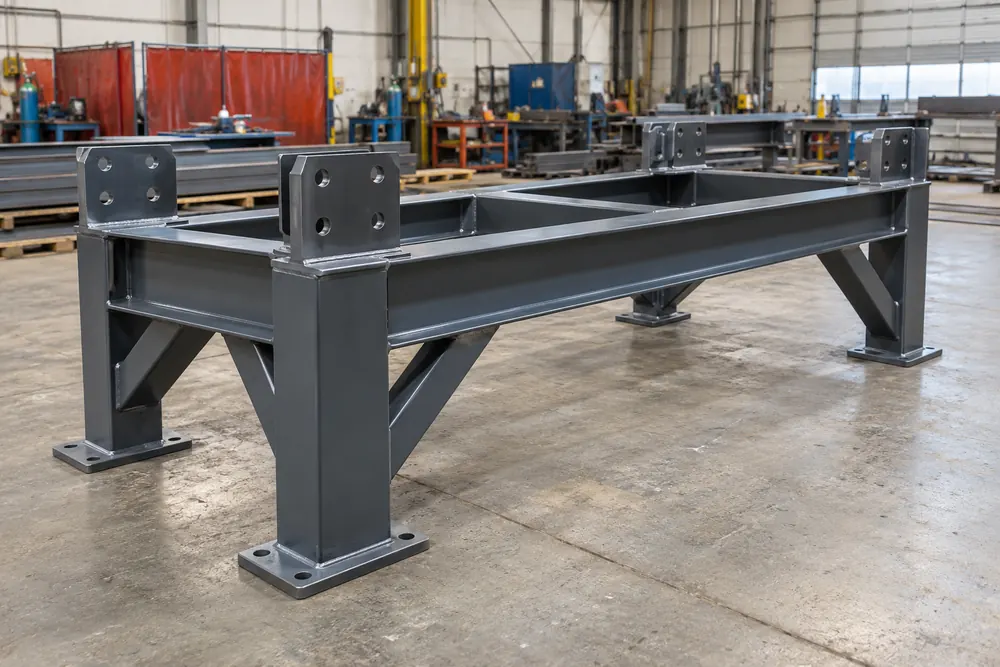
Steelwork For A Specific Job
Bespoke steel fabrication is useful when standard products cannot meet the dimensions, connection details or operating conditions of a commercial project. Examples include custom equipment bases, support assemblies, brackets and fitted steel frames. The purpose is to solve a practical requirement with a documented specification.
A one-off part still needs a repeatable manufacturing description. Record the overall dimensions, material grade, critical interfaces and finish so everyone is working from the same information. We help organise these enquiries for contractors, industrial businesses and facilities teams across Hull and the surrounding East Yorkshire area.
Start With Constraints, Not Just Shape
Describe what the steelwork must support, where it will sit and how people will use or maintain it. Existing pipework, restricted openings, cleaning access or a difficult fixing position can be more important than the visible outline. Photographs and a marked-up plan help reveal constraints that a standalone part drawing may miss.
Identify which dimensions are fixed and which can change. A designer may be able to simplify the assembly, provide better access to bolts or split a large frame into transportable sections. Those choices should be agreed before workshop drawings are approved, rather than discovered during installation.
Design Responsibility And Approval
Bespoke does not mean design decisions can be left informal. Where a frame carries a structural load or supports safety-critical equipment, a competent designer should establish the load cases and connection details. The appointment should make clear who calculates the members and who checks the supporting structure.
Fabrication drawings translate that design into components, welds, holes and assembly references. Agree who approves those drawings and what approval covers. A dimensional sign-off by a buyer does not replace structural design, and an initial budget drawing should not be mistaken for an instruction to manufacture.
Relevant Standards And Site Duties
The applicable requirements depend on the finished component’s intended use. Structural steel components within scope need the relevant BS EN 1090-1 conformity assessment and BS EN 1090-2 execution requirements. Confirm the execution class and evidence required for the specific package, rather than assuming every custom item follows the same route.
If installation is construction work, the Construction (Design and Management) Regulations 2015 apply to the relevant duties and coordination. Equipment-related changes can also affect safe use under PUWER. Our discussion should establish these interfaces early, with HSE’s CDM guidance available for construction dutyholders.
From Initial Idea To Finished Assembly
Begin with a description of the problem and any drawings or sample parts you have. Confirm the site location, quantities, operating environment and programme. Missing dimensions or unresolved loads should be listed openly so that any survey or design stage can be allowed for.
Once details are approved, fabrication involves material preparation, cutting, drilling, fitting and joining in an appropriate sequence. Templates or a trial fit can help check unusual interfaces. Distortion and access for finishing should be considered where a frame contains several welded connections or enclosed sections.
Inspection is then matched to the agreed scope, including key dimensions, fit-up and finish. Delivery and installation arrangements should reflect the assembly size and the route into the building. Confirm whether the final handover needs drawings, inspection records, material documents or a maintenance note.
Cost Drivers In One-Off Steelwork
A bespoke fabrication price reflects design input, material, setup time, workshop labour and finishing. A small assembly with many different pieces may take longer than a larger straightforward frame. Prototype work, templates, trial fits and special inspection requirements should be visible in the quotation.
Send enough information to separate a budget estimate from a fixed manufacturing scope. Explain whether repeat orders are likely, because a reusable jig may be useful for later batches. For conventional building members, see structural steel fabrication, and for joining an existing assembly, read about commercial welding.
Bespoke Steel Fabrication FAQs
Can Bespoke Steelwork Start From A Sketch?
Bespoke steelwork can start from a sketch for an initial discussion, provided its limitations are clear. Include the intended use, approximate dimensions and site constraints. Before manufacture, the design, material, connections and final dimensions need approval. Structural or safety-critical applications may also need calculations from a competent engineer.
Is A Prototype Worth Making?
A prototype can be useful for bespoke steelwork where fit, access or repeated production creates uncertainty. It allows the agreed interfaces to be checked before a wider batch is made. Discuss what the trial must prove, who will inspect it and whether any changes will require a revised drawing or price.